Mostrando entradas con la etiqueta agricultura. Mostrar todas las entradas

lunes, 20 de agosto de 2012


PRESS RELEASE FROM THE AFRICAN CENTRE FOR BIOSAFETY

The African Centre for Biosafety (ACB) has today released its new study titled, “How much glyphosate is on your dinner plate? SA's food safety compromised by lack of testing.” This study highlights numerous risks posed by the herbicide glyphosate to human and animal health as well as worrying regulatory failures, particularly in relation to the monitoring, inspection and testing of food for glyphosate residues.

South Africans consume glyphosatei ridden food on a daily basis: currently, 77% of maize grown in South Africa is genetically modified (GM) and of this 54% (about 1 million hectares) is modified to be glyphosate tolerant. Soya products on our market suffer the same fate: all of the GM soya planted in South Africa is tolerant to glyphosate, planted on 480 000 ha. South Africa also imports bulk shipments of GM grain from countries growing herbicide tolerant crops.

According to Mariam Mayet, Director of the ACB, “the ACB was desirous of testing food samples for glyphosate residues. In the course of trying to get these samples tested, the ACB learnt that while there are numerous private testing laboratories throughout South Africa, nine of which are ISO 17025ii accredited, none were able to test for glyphosate residues in our samples of maize and soya products. Testing could only be achieved if the samples were sent abroad, at considerable expense.”

The main findings of the study include:
  1. Numerous peer reviewed studies on glyphosate exist, documenting the health risks posed to to animal and human health;
  2. There is a complete lack of testing for glyphosate residues in local market produce. The private sector relies on independent laboratories for monitoring, but none of these currently are able to test for glyphosate. Local government health authorities are responsible for the inspection and monitoring of imported foodstuffs in terms of the National Health Act. However, municipalities suffer from severe capacity constraints and do not undertake any testing for exceedance of the Maximum Residue Limit (MRL).
  3. Information from the Department of Agriculture, Forestry and Fisheries (DAFF) with regard to the registration, re-registration and review of glyphosate is veiled in secrecy.
  4. Failure by government to reform current legislation regulating glyphosate, and all pesticides for that matter, despite government itself acknowledging such legislation to be hopelessly outdated and unconstitutional.

According to Mayet, “A moratorium should be placed on the further use of glyphosate until such time that capacity exists in South Africa to monitor and test for residues in locally produced and imported food.”

The ACB calls on government to make the following information available to the public:
  • Data on glyphosate residues in food, water, and soil as a result of the introduction of glyphosate resistant GM crops;
  • Details of its surveillance of glyphosate in food, agricultural and natural systems;
  • What support  it is giving to South African labs to establish the requisite capacity to monitor MRLs in our food; and
  • What progress has been made since the publication of the Pesticide Management Policy with regard to legal reform.

ACB’s Study titled “How much glyphosate is on your dinner plate? SA’s food safety compromised by lack of testing” can be downloaded from its website.

Contact: Mariam Mayet, African Centre for Biosafety
083 269 4309

i Glyphosate is the 'active ingredient' in numerous chemically based herbicides that are used in diverse situations including in food production, timber plantations, sports fields and home gardens.

ii ISO 17025 is the recognised international standard for competence of testing and calibration laboratories. Download the ACB study for further explanation.

The African Centre for Biosafety
www.acbio.org.za
PO Box 29170, Melville 2109 South Africa
Tel: +27 (0)11 486 1156

lunes, 13 de agosto de 2012

African Centre for Biosafety: Sign against "Agent Orange" in South Africa, ACDP submits 'Agent Orange' petition to Parliament

The African Christian Democratic Party is supporting a petition by the African Centre for Biosafety (ACB) to overturn a government decision to allow the import of “Agent Orange” GM Maize into South Africa. The maize is dubbed ‘Agent Orange’ because it has been genetically modified to survive very liberal applications of a weedkiller called 2,4-D, one of the key ingredients of the infamous defoliant chemical used in the Viet Nam war. The GM maize in question belongs to US chemical giant, Dow Chemicals.

YOU CAN SIGN THE PETITION IN AVAAZ:
BAN AGENT ORANGE GM MAIZE IN SOUTH AFRICA

A wide range of experts in the health field in South Africa have supported the Petition, citing worries about the potential health impacts and government’s lack of capacity to monitor the 2,4 D residues left on food crops. Cheryllyn Dudley, Member of Parliament and Chief Whip of the ACDP, today said: “2,4-D GM maize could pose a health risk to Sou th Africans who eat maize as a staple food, unlike in America where maize is grown primarily for livestock. Government has been too hasty in granting the approval”.

Director of the ACB, Mariam Mayet claims that “the introduction of 2,4-D resistant crops is expected to trigger a 30-fold increase in the herbicides’ use by the end of the decade. This chemical has been linked to non-Hodgkin’s lymphoma (cancer of the white blood cells) and numerous studies on animals have produced a variety of disturbing results”.

The use of 2,4-D is banned completely in Norway, Sweden and Denmark. The World Health Organisation classifies the Chlorophenoxy herbicide group, of which 2,4-D is by far the most widely used member, as ‘possibly carcinogenic to humans’.

The petition, supported by 18 health professionals and academics, 20 South African organisations and over 6000 individual signatories, calls on the South Af rican government to overturn the decision to allow the importation of the maize for “food, feed and processing” and to review the decision-making process around GMOs to ensure that it is “transparent, just and fair”. “We are handing over our food production to massive chemical companies whose interest is to keep farmers on their chemical treadmill. We should be supporting healthy food production systems that will sustain our people and the environment into the future. This decision needs to be interrogated and the public needs to be educated and involved”, Dudley said.

We have prepared a fully referenced Fact Sheet  titled "What you should know about DOW's 2,4 GM maize".
Download thePDF book from this page and please help spread the word via the Facebook Like button.


For more information contact:

Cheryllyn Dudley, MP, Cell: 082 890 6520 (SMS best for urgent response)

miércoles, 25 de julio de 2012

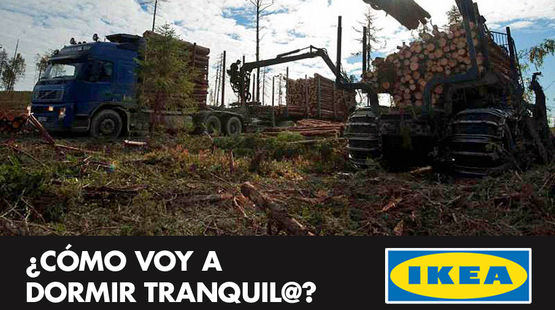
Salva los bosques de Ikea y su talado destructor: salva la selva

Ikea se está cargando (sí, con etiqueta industrial de respeto ecológico, ya sé...) los ecosistemas de Rusia, como dice abajo (ver negrita). Salva la selva está recolectando firmas con Protect the Forest para hacérselas llegar. Sabemos que Ikea escucha este tipo de acciones, así que firma!!

Salva la selva lleva años luchando por todo tipo de causas justas, entre las que se encuentra desde la vida de activistas que nos protegen a todos en pequeñas luchas desconocidas, hasta este gigante actual que es Ikea y los bosques rusos. Os recomiendo que os suscribáis a Salva la selva, no mandan muchas firmas pero todas son muy buenas.

el link:
https://www.salvalaselva.org/mailalert/877/ikea-y-los-bosques-como-dormir-tranquil/thank-you/81cf580d4072f091cf899a03c33a38cf#form

Y esta es la carta que se envía:
Grupo Ikea
Sr. Mikael Ohlsson, presidente y Chief Executive Officer (CEO) del grupo Ikea
Bargelaan 20, Leiden, NL 2333CT, Paises Bajos
TEL +31 71 565 7100; Fax: +31 71 565 7180
Estimado Sr Ohlsson:
Ikea hace publicidad con “sostenibilidad” y “gestión forestal sostenible”. Pero en la práctica no es lo que llevan a la práctica en Rusia. En la región de Carelia, la filial de Ikea Swedwood, está talando en una concesión de 300.000 hectáreas de bosques para abastecer la demanda de madera de la multinacional para la producción de sus muebles. Además, Swedwood compra in situ grandes cantidades de madera a otras empresas.
Los bosques naturales, incluidas superficies de bosques intactos, se talan con máquinas cosechadoras. La biodiversidad resulta eliminada, los suelos destruidos por los pesados neumáticos de las máquinas forestales. Los suelos necesitarán décadas para regenerarse. Tan sólo cerca del diez por ciento de los bosques boreales han quedado en su estado original.
La tala con máquilas pesadas y la corta de los árboles centenarios no merecen en absoluto un “sello verde”. El sello de certificación de la empresa FSC International Center GmbH, con sede en Bonn y la certificación de las concesiones a Swedwood para la extracción de madera son a todas luces un lavado verde. FSC ha recibido desde hace años críticas de organizaciones ambientales por sus estándares flojos, y ha sido acusado de otorgar cientos de certificados dudosos e incluso casos de fraude. Engaños (ver entre otros www.fsc-watch.org). Por eso, no reconocemos a FSC.
A pesar de las quejas de grupos ambientales como Protect de Forests de Suecia y SPOK Karelia de Rusia, las prácticas destructivas de Swedwood continúan al mismo ritmo.
Por favor, detenga inmediatamente la tala de los bosques naturales. Los bosques que quedan en Rusia deben conservarse, en lugar de terminar como materia prima barata para Ikea. ¿Cómo puedo "dormir tranquil@", como me ofrece Ikea en su reciente publicidad televisiva?
Atentamente,

Para participar es suficiente con su apellido, su país y su dirección de correo electrónico. Los otros datos son opcionales.

domingo, 22 de enero de 2012

Festival apoyo Finca El Cabillón

El temporal de viento de diciembre pasado causó graves e irreparables daños a los invernaderos de la finca de producción ecológica El Cabillón, integrada en la Fundación EDES (Tapia de Casariego), que emplea a personas con discapacidad. Para contribuir a reparar los desperfectos, cuyo montante económico asciende a unos cuantos miles de euros, la asociación La Casa Azul organiza un festival de apoyo con el fin de recaudar fondos.

Dicho festival, en el que colaboran desinteresadamente escritores, grupos de teatro y grupos musicales de la comarca, tendrá lugar el sábado, 28 de enero de 2012, a partir de las 20:00 horas, en la Casa de Cultura de Vegadeo.

Las entradas, que no se pueden adquirir anticipadamente, se pondrán a la venta, al precio de cinco euros, media hora antes del festival, en la propia Casa de Cultura, hasta completar el aforo de algo más de doscientas personas.

Para quienes no puedan asistir al festival, pero quieran colaborar económicamente, se ponen a la venta entradas de Fila 0, al mismo precio de cinco euros. Estas entradas se pueden adquirir en el local de La Casa Azul, calle Pedro Fernández Méndez, 2, As Veigas, 33710 Navia, que se abre los lunes, miércoles y viernes de 17:00 a 20:00 y los jueves y sábados de 11:00 a 13:30. También poniéndose en contacto con las personas de la asociación o ingresando el donativo en la cuenta de La Casa Azul número 3059-0028-64-2247451426, de la oficina de la Caja Rural de La Caridad.
Página web de la Fundación EDES: http://fundacionedes.org/

martes, 20 de diciembre de 2011

Agrofuel push in SA back; government publishes draft mandatory blending regulations.

Before we end this year, the ACB would like to share the following with you:

The South African government has recently published draft regulations for the mandatory blending of agro-fuels into the country’s liquid fuel supply. The regulations state that at least 2% of all petrol, and 5% of all diesel sold must come from agrofuels. This means that around 700 million litres of agrofuels must be produced every year!

Probing beneath the veneer of the greenwash and job creation speak of government policies, one finds that the real beneficiaries will be agribusiness, with emerging farmers being roped into dodgy private-private partnerships. The agro-chemical corporations, who dominate South Africa’s domestic market are set on scoring windfall profits in the production of “renewable” fuels. Soybeans appear to be a hot favourite for biodiesel production! To produce the required quantities of soybeans will entail the use of Monsanto’s GM seeds, and will require the use of 2.5 million litres of Monsanto’s highly toxic chemical herbicide glyphosate; this would need to be mixed in with nearly 160 million litres of water! Agrofuel production would also not be possible without the use of prodigious quantities of synthetic fertislier; the sugar industry accounts for 18% of domestic use alone. Over 60% of South Africa’s fertiliser demand is imported, and the global fertiliser industry is itself highly dependent on fossil fuels.

Even if all the soybean, sunflower and canola grown here were diverted to agrofuels, this would barely provide enough for the demand a 5% blending ratio and raises questions about the importation of feedstock from the region and its concomitant impact on food security on the African continent.

It is estimated that 400,000 tons of sugar would be required to satisfy the 2% bioethanol blending ratio, yet the sugar industry is battling with its worst drought in its history, with production the lowest it has been in 15 years. Interestingly, emerging farmers produce less than 10% of South Africa’s annual crop. Much is being made of sugarbeet production by small farmers in the Eastern Cape, a crop that has not been traditionally cultivated in South Africa, and whose large scale cultivation will threaten household food security.


The ACB has been tracking the developments around South Africa’s nascent agrofuels industry for a number of years, and has written extensively of the threats to local communities, the environment, and food security that this entails. For more information please refer to www.biosafetyafrica.org.za .

Please see and download our objections and comments on the mandatory blending to the Department of Energy, at http://www.biosafetyafrica.org.za/images/stories/dmdocuments/Mandatory-blending-response-2011-11-18.pdf

lunes, 10 de octubre de 2011

COPORATE CONCENTRATION AND CONTROL IN THE GRAINS AND OILSEED VALUE CHAIN IN SOUTH AFRICA: A CASE STUDY OF THE BUNGE/SENWES JOINT VENTURE

October 3, 2011

The Bunge/Senwes joint venture signals the first significant investment by Bunge in Africa. Bunge is one of the world's largest and most influential corporations and is amongst a handful of companies dominating global trade in agricultural commodities. Senwes holds a dominant position in the South African market for the storage and handling of grain crops. In this briefing, we provide inter alia:

A breakdown of the value chains of the various grains and oilseeds that the joint venture will focus upon, with particular attention being paid to the storage and handling of these crops;
Information on South Africa¹s three largest grain storage companies;
A summary of the merger and acquisition activity in the agribusiness sector, including areas of strategic convergence such as poultry production and grain storage and trading; and
Our major concerns with the joint venture and the imbalances and inequities in the food system that it entrenches.
 Download the full paper from the African Centre for Biosafety.

lunes, 22 de agosto de 2011

INFORMACIÓN sobre transgénicos: Guía comentada de CHILE SIN TRANSGENICOS

Chile sin Transgenicos
Más información
INFÓRMATE:

Información General.
• Alimentos transgénicos. Qué son y por qué presentan una amenaza http://blogonprod.nearwen.com/?p=914
• Alimentos transgénicos, el negocio de Monsanto: http://nuestrasalud.mx/contenido/index.php/2011/07/26/alimentos-transgenicos-el-negocio-de-monsanto/
• Folleto tránsgénicos RAP AL:
http://www.rap-al.org/articulos_files/Cuatriptico%20_Transgenicos_Semillas2010.pdf
• Los transgénicos y sus múltiples problemas. Edición especial con varios artículos: http://transgenicos.ecoportal.net/
• Entrevista a Marie Monique Robin sobre la principal industria que domina las semillas en el mundo: http://www.pagina12.com.ar/diario/dialogos/21-122355-2009-03-30.html
• Médicos advierten: evite los alimentos modificados genéticamente: http://www.mundonuevo.cl/blog/articulos/medicos-advierten-evite-los-alimentos-modificados-geneticamente/
• Entrevista: cáncer e infertilidad relacionados con los alimentos transgénicos que ingerimos diariamente: http://www.rapaluruguay.org/transgenicos/Prensa/cancer_e_infertilidad.html
• Entrevista a Entrevista a Gilles-Eric Séralini, Biólogo molecular y experto en transgénicos: http://www.webislam.com/?idt=12663
• 15 años de soja transgénica en Argentina: La prueba del delito http://lavaca.org/notas/15-anos-de-soja-la-prueba-del-delito/
• Los alimentos transgénicos: otra vez en la mesa de discusión http://www.ecoportal.net/Temas_Especiales/Transgenicos/Los_alimentos_transgenicos_otra_vez_en_la_mesa_de_discusion
• Cultivos transgénicos amenazan la efectividad de los antibióticos: http://www.reduas.fcm.unc.edu.ar/cultivos-trangenicos-amenazan-la-efectividad-de-los-antibioticos/
• SERNAC: soya transgénica en alimentos (abril 2001) http://www.sernac.cl/sernac2011/estudios/detalle.php?id=380
• Guía de alimentos transgénicos en Chile (2006): http://www.greenpeace.org/raw/content/chile/photosvideos/documentos/guia-de-alimentos.pdf
• Ingeniería Genética, ¿la estafa más grande del mundo? http://www.youtube.com/watch?v=2O7PtCEmovw&feature=youtu.be&a
• Documental: El Mundo según Monsanto. No dejes de verla: http://www.youtube.com/watch?v=LdIkq6ecQGw
• Vídeo: Robyn O' Brien, MBA habla la verdad sobre la industria de los transgénicos en TED: http://dotsub.com/view/b7e2a34c-20c3-48a2-9216-b4b13245316a
• Documental: Daños de la soya transgénica http://www.youtube.com/watch?v=Gy7j4VulDlo&feature=related
• Video 1er Encuentro Médicos de Pueblos Fumigados: http://www.youtube.com/watch?v=CyJ40q7UWK4&feature=youtu.be
• Video Dr Andrés Carrasco y Dr Lucero sobre la realidad de los cultivos transgénicos:
http://www.youtube.com/watch?v=SPJgYsEgJM0
Video Entrevista al Dr Don Huber- Roundup, GMOs y Nuevo patógeno que amenaza a la población mundial http://www.youtube.com/watch?v=O5hQtvTFvjM&feature=youtu.be
• Entrevista e Iván Nuñez en radio futuro a Chile sin Transgénicos:
http://www.youtube.com/watch?v=2AXOi_UyXpo

Información Específica:
Normalmente toda la información relevante sobre transgénicos esta en inglés, pero aquí hay algunos vínculos/documentos en castellano que dejan bien informado a cualquiera:
• Cultivos transgénicos, cero ganancias: http://www.greenpeace.org/mexico/Global/mexico/report/2010/7/cultivostransgenicos-ceroganancias.pdf
• Soja transgénica: ¿Responsable? ¿Sostenible?:
http://www.gmwatch.eu/images/pdf/gm_full_spa_v3.pdf
en inglés: http://www.gmwatch.eu/images/pdf/gm_full_eng_v15.pdf
• Resumen: http://www.gmwatch.eu/images/pdf/gmsoy_sust_respons_summary_spa_v2.pdf
• ¿Quién se beneficia con los cultivos transgénicos? http://www.foei.org/es/recursos/publicaciones/pdfs-por-ano/2010/bfquien-se-beneficia-con-los-cultivos-transgenicos-2010/view
• En defensa de un mundo sustentable sin transgénicos por el Independent Science Panel: http://www.accionecologica.org/images/2005/transgenicos/documentos/por_un_mundo_libre_de_ogm.pdf
• Informe 1º Encuentro Nacional de Medicxs de pueblos fumigados: http://www.reduas.fcm.unc.edu.ar/informe-encuentro-medicos-pueblos-fumigados/
• Declaración del 2º Encuentro de médicos de pueblos fumigados: http://www.reduas.fcm.unc.edu.ar/


En inglés:
• GMO’s Position paper de la American Academy of Environmental Medicine: http://www.aaemonline.org/gmopost.html
• Glyphosate-Based Herbicides Produce Teratogenic Effects on Vertebrates. Andrés carrasco, et. al. http://www.gmwatch.eu/images/pdf/Carrasco_research_paper.pdf
• Failure to Yield (Union of Concerned Scientist): http://www.ucsusa.org/assets/documents/food_and_agriculture/failure-to-yield.pdf
• GM Crops: research documenting the limitations, risks, and alternatives: http://gmwatch.org/images/stories/gm-cropsgm-watch-version.pdf
• Algunos estudios sobre los efectos en la salud de los transgénicos I:
http://semillasysalud.wordpress.com/2010/12/20/estudios-sobre-los-efectos-en-la-salud-de-los-transgenicos/#comment-306
• Algunos estudios sobre los efectos en la salud de los transgénicos II:
http://noticiasdeabajo.wordpress.com/2011/03/26/lista-de-estudios-cientificos-sobre-los-efectos-en-la-salud-de-los-transgenicos/
• State-of-the-science on the health risks of gm foods: http://www.responsibletechnology.org/docs/145.pdf
• Proceedings of the GMO Free Europe Conference (2006-20101):
http://www.gmo-free-regions.org/

Los mejores sitios web de información:
http://www.responsibletechnology.org/ y http://www.gmwatch.org/. En castellano: http://www.combat-monsanto.es/
Facebook: Chile sin Transgénicos
YouTube: http://www.youtube.com/user/ChileSinTransgenicos
Twitter: https://twitter.com/#!/sintransgenicos

lunes, 31 de enero de 2011

The dirty politics of the global grain trade - GM maize farmers face ruin in SA

Dear friends and colleagues

Recently, the South African press reported on the possible bankruptcy
faced by maize farmers. The African Centre for Biosafety (ACB) has
today released a new report titled “The dirty politics of the global
grain trade – GM maize farmers face ruin in SA,” which provides an
analysis of why South Africa’s record 13 million ton harvest of
maize, at least half of which is GM, has threatened financial ruin for
up to 30% of its maize farmers. The paper addresses the following
issues: the political economy of maize in South Africa; new GM markets
for South Africa; the real beneficiaries of the maize mountains; and
regulatory issues, including the extent to which South Africa’s GMO
permit system contributes towards speculation in the GM maize trade
and the price of food. The paper can be found on the website of the
ACB at www.biosafetyafrica.org.za

South Africa’s maize farmers recorded a bumper harvest in 2010, yet
now they face ruin. The price of maize has fallen precipitously in the
last 12 months owing to a crisis of over-production of both GM and
non-GM maize. A mass exodus from the maize sector is anticipated, with
as many as 30% of farmers facing potential liquidation.

During July 2010, the Executive Council: GMO Act (EC) granted export
permits allowing 625,000 tons of GM maize to be exported to various
countries in Africa and Asia. Of this, 600,000 tons were bound for
Taiwan and South Korea. A further 35,000 MT of GM soybeans were also
exported to various countries. Thus, for 2010, South Africa exported
over 1 million tons of GMOs, of which GM maize accounted for a
staggering 956,000 MT.

The record GM exports from South Africa is attributed a bumper
harvest, officially the highest since 1982. Far from contributing to
greater food security in the country, the almost dogmatic focus on
production has led to a precipitous fall in local maize prices.
Consequently, the Solidarity Research Institute group in South Africa
has warned that an oncoming financial crisis in the South African
agricultural sector could drive 30% of maize farmers away from the
sector. For each additional unit of value added to total GDP,
agriculture creates twice as much employment as the rest of the
economy. The knock on affects of the crisis on rural South African
communities could be catastrophic.

Download the paper from our website

.

miércoles, 1 de diciembre de 2010

QUIEREN PROHIBIR LAS HIERBAS MEDICINALES EN LA UE, FIRMA EN CONTRA DE LA PROHIBICIÓN!!!

Triunfo de la Industria Farmacéutica : las hierbas medicinales desaparecerán de la U.E .

La gran industria farmacéutica casi ha conseguido eliminar a todos sus competidores. Desde el 1 de abril de 2011 todas las hierbas medicinales se convertirán en ilegales en la Unión Europea. Las personas sólo podrán medicarse con los productos que genere esta industria, sin ninguna otra opción, y pagando los precios que esta industria quiera.

Sólo protestando activamente quizás podamos parar esta parodia. Si nos mostramos apáticos, entonces nada se opondrá a los deseos de la Industria Farmacéutica. Nuestro derecho a proteger nuestra salud y la de nuestros hijos está en juego. ¡No hay tiempo que perder! Sólo te llevará como mucho 5 minutos con pegar y copiar. Encontrarás una carta modelo y las direcciones al final de este email.

También puedes firmar esta petition internacional:
http://www.gopetition.com/petition/39757.html
y por supuesto enviar este email a tus contactos.

Cómo Luchar contra Esta Invasión en Nuestra Salud y Bienestar
Debemos tomar medidas. Si vive en Europa, envíe por favor una carta o mensaje a los miembros del Parlamento Europeo. En esta página puede consultar quiénes son miembros del Parlamento y las direcciones de contacto (o también al final de este articulo). Dígales claramente que adopten una actitud de respeto al derecho de las personas a elegir sus tratamientos herbarios.

Si encuentra difícil escribir tal carta hay un modelo al final de este artículo. No dude en usarlo.

Quizás luego no preguntemos que por qué no lo hicimos, por qué perdimos el tiempo viendo un reality show en lugar de preocuparnos por esta cuestión.

http://www.infowars.com/big-pharma-scores-big-win-medicinal-herbs-will-disappear-in-eu/

Modelo de carta:
ASUNTO: Directiva Productos Medicinales Herbaria Tradicional

Estimado………………….

Utilizo los remedios medicinales tradicionales, aquellos que se han venido utilizando en Europa y otros muchos países del mundo durante miles de años.
Hasta el presente ningún producto herbario de la Medicina Tradicional China o de la India ( Ayurvédico) ha sido aprobado siguiendo la normativa que establece la Directiva sobre Productos Medicinales Herbarios. Me preocupa que las plantas medicinales tradicionales, que se han estado utilizando como suplementarios alimenticios, sean prohibidos a partir del 31 de marzo de 2011, cuando expira la fase de transición.

Son urgentes los cambios en esta Directiva, de modo que se adapte a la cultura herbaria tradicional.

Le ruego haga lo que esté en sus manos para que esta Directiva no se apruebe en los términos actuales, ya que supondría una pérdida irremediable, tanto cultural, como para nuestra salud, después de miles de años en los que se han venido utilizando las plantas como remedios naturales.

Atentamente,

Direcciones email de diputads de españa:
josefa.andresbarea@europarl.europa.eu, pablo.ariasecheverria@europarl.europa.eu, ines.ayalasender@europarl.europa.eu, pilar.ayuso@europarl.europa.eu, maria.badiaicutchet@europarl.europa.eu, izaskun.bilbaobarandica@europarl.europa.eu, pilar.delcastillo@europarl.europa.eu, alejandro.cercas@europarl.europa.eu, ricardo.corteslastra@europarl.europa.eu, agustin.diazdemera@europarl.europa.eu, rosa.estaras@europarl.europa.eu, santiago.fisasayxela@europarl.europa.eu, carmen.fragaestevez@europarl.europa.eu, josemanuel.garcia-margalloymarfil@europarl.europa.eu, iratxe.garcia-perez@europarl.europa.eu, eider.gardiazabalrubial@europarl.europa.eu, salvador.garrigapolledo@europarl.europa.eu, luis.degrandespascual@europarl.europa.eu, enrique.guerrerosalom@europarl.europa.eu, cristina.gutierrez-cortines@europarl.europa.eu, sergio.gutierrezprieto@europarl.europa.eu, esther.herranzgarcia@europarl.europa.eu, carlos.iturgaizangulo@europarl.europa.eu, teresa.jimenez-becerril@europarl.europa.eu, oriol.junquerasvies@europarl.europa.eu, veronica.lopefontagne@europarl.europa.eu, juanfernando.lopezaguilar@europarl.europa.eu, antonio.lopezisturiz@europarl.europa.eu, miguelangel.martinez@europarl.europa.eu, antonio.masiphidalgo@europarl.europa.eu, gabriel.mato@europarl.europa.eu, jaime.mayororeja@europarl.europa.eu, i.mendezdevigo@europarl.europa.eu, emilio.menendezdelvalle@europarl.europa.eu, willy.meyer@europarl.europa.eu, francisco.millanmon@europarl.europa.eu, maria.munizdeurquiza@europarl.europa.eu, raimon.obiolsigerma@europarl.europa.eu, andres.perellorodriguez@europarl.europa.eu, teresa.rieramadurell@europarl.europa.eu, carmen.romerolopez@europarl.europa.eu, raul.romevairueda@europarl.europa.eu, joseignacio.salafranca@europarl.europa.eu, antolin.sanchezpresedo@europarl.europa.eu, francisco.sosawagner@europarl.europa.eu, ramon.tremosa@europarl.europa.eu, alejo.vidal-quadras@europarl.europa.eu, luis.yanez@europarl.europa.eu, pablo.zalbabidegain@europarl.europa.eu,

miércoles, 21 de abril de 2010

URGENTE Campaña contra lncineradora en Serin, Asturias, de cogersa

Quedan 6 días para la votación de los miembros de COGERSA a favor o en contra de la incineradora. Ya han recibido 32.000 mensajes en contra, sumate a ellos siguiendo las instrucciones.

¡Rebélate contra la incineradora!

El próximo Lunes 26 de Abril, los representantes de los Ayuntamientos asturianos en COGERSA votarán a favor o en contra de la incineradora que se pretende construir en Serín.

La construcción de una incineradora afectaría muy negativamente al empleo, la economía, la salud y la gestión de residuos de los asturianos.

¡Diles que voten en contra!

- Ciberactúa en este enlace:

http://www.losverdesdeasturias.org/peticiones/protesta.php?envio=14

viernes, 16 de abril de 2010

New from the ACB: GM Sugarcane: A long way from commercialisation?

Despite the best part of a decade of research and field trials,
genetically modified sugar cane in South Africa remains a long way
from commercial cultivation. Numerous research projects are currently
under way at a number of publicly and privately funded research
bodies, most of which are concentrating on increased sucrose and
biomass content. Late last year the Department of Science and
Technology announced the creation of a strategic sugar research
platform to be overseen by the PlantBio Trust, a branch of the
Department of Trade and Industry that focuses on plant biotechnology.

Internationally, both Brazil and Australia lead the way in GM sugar
cane research, and both countries believe they can bring it to market
commercially within the next 5 years. Under the guise of south –
south co-operation, Brazil has been particularly active in extending
its influence as the world’s largest sugarcane producer into the
African continent. Huge sugarcane for ethanol investment deals have
been signed with Mozambique, while a steady succession of research
partnerships have been undertaken between Brazilian and South African
institutions.

The biotech industry, either through direct research and acquisitions
or indirectly via a number of lobby groups, has been very active in
both GM sugarcane and sugarbeet. In 2009 GM sugarbeet adoption in the
US and Canada occurred at a faster rate than for any previous GM crop.
The Better Sugarcane Initiative (BSI), formed in 2005, is the
‘environmental round-table’ of the sugarcane world (and by
definition industry). Already active in South Africa, the BSI’s
members include some of the world’s largest food, commodity, and oil
companies. While their position on GM sugarcane remains publically
neutral, the experience of other rountables, notably the Roundtable on
Responsible Soy (RTRS), points to another potential industry conduit
into the environmental policy discourse.

Finally, developments around transgenic sugarcane cannot be viewed in
isolation from those around the global agrofuel drive. South Africa
has had a national agrofuels strategy in place since 2007, with
several massive projects already in operation around the country using
conventional sugarcane. So far GM sugarcane has been kept off the
agrofuel agenda, but there is no doubting the potential compatibility
of the two, nor the political and economic clout of those who seek
their union.

You can download the paper from our website from this link.

http://www.biosafetyafrica.org.za/index.php/20100412296/GM-Sugarcane-A-long-way-from-commercialisation/menu-id-100026.html

sábado, 6 de marzo de 2010

Dawn of the Risky Stacked GMO Era: A taste of things to come

March 2010

The African Centre for Biosafety (ACB) has today released a new study
titled “The GM stacked gene revolution: a biosafety nightmare”
which reveals some startling current and future trends concerning the
advent of GM stacked varieties.

Stacked GMOs are those containing more than one gene genetically
engineered into a crop plant. A controversial stacked GMO, Smarstax
containing 8 such genetically engineered genes, was commercially
approved in the US, Canada, Japan and South Korea during 2009. Stacked
gene varieties are highly complex, posing new biosafety risks that
outpace the capacity of regulatory systems. “Stacked GM varieties
also promise unprecedented scope for patents on life forms” said
Gareth Jones, researcher for the ACB.

According to the study by Jones, from 2006 to 2007, the global area
of stacked trait GMOs planted to cotton and maize grew by 66%, with
maize alone increasing by over 100%, from 9 million to 19 million ha.
Plantings of stacked varieties ballooned between 2007 and 2008 at 23%
compared with its single trait counterparts: 9% for herbicide
tolerance and a 6% reduction in planted area for insect resistance. A
total of 26.9 million ha of stacked biotech crops were planted
globally in 2008 compared with 21. 8 million ha in 2007, with the US
having planted 41% (26.7 million ha) of its total biotech area of 65.2
million ha to stacked varieties.

Stacked GMOs deliver nearly twice the rate of profit compared to
their single trait counter parts, often forcing farmers to pay for
traits they neither want nor need. Increased profits further
strengthen the dominant position of the world’s largest biotech
companies; between 1996 and 2007 over 90% of all stacked events
approval globally were owned by a handful of multinational companies,
with Monsanto leading the pack.

In 2006, stacked GMOs accounted for 23.7% (approximately $1.4
billion) of the global GM market, worth $6.5 billion. Monsanto
expected 79% of its maize seed sales in 2009 to be triple stacked
while Syngenta plans to make triple stacked maize account for 85% of
its portfolio for 2011.

South Africa is a fervent supporter of stacked GMOs, granting a
staggering 56 permits for stacked GM maize varieties during 2009
alone. Currently, 19% of South Africa’s GM maize area is planted to
stacked GM varieties, representing a four-fold increase since 2007.

According to Jones, “If the adoption rate of stacked traits between
2005 and 2009 is projected forward, a colossal 81 million ha of
stacked GMOs could be planted by 2015 (an area larger than Mozambique
or Turkey).”

In 2008 Monsanto announced that it expected its profits to treble to
nearly $3 billion by 2010 and that its new stacked trait releases
would account for the bulk of this. “Despite the rhetoric promising
GM drought tolerant varieties for the poor and the marginalised, it is
clear from the current trends that the game is set for a stacked GM
revolution” said Mariam Mayet, Director of the ACB.

The ACB briefing can be accessed at
http://www.biosafetyafrica.org.za/index.php/20100304290/The-GM-stacked-gene-revolution-A-biosafety-nightmare/menu-id-100026.html

miércoles, 13 de enero de 2010

Africa's Green Revolution Drought Tolerant Maize Scam

Prediction of exacerbated drought in Africa due to climate change is
apparently the driving force behind the establishment of the Water
Efficient Maize for Africa (WEMA) initiative, another prong of the
so-called “New Green Revolution for Africa”.

WEMA seeks to develop drought tolerant maize varieties through a
program which is being presented as a panacea for solving issues of
hunger on the continent using marker assisted breeding and genetic
engineering. That this is being done under the guise of philanthropy
sidesteps questions about the real causes of hunger, disregards issues
of imbalanced global distribution of food and underplays the financial
benefits to be derived by the various proponents of the scheme.

The possible risks to small-scale farmers, whom WEMA targets, include
loss of biodiversity through gene flow, a dependence on expensive
inputs into farming, possible exposure to intellectual and property
rights claims and impacts on their food security. The most effective
ways of supporting small-scale farmers is through agro-ecological
approaches to farming. These focus on small-scale sustainable
agriculture; locally adapted seed and ecological farming that better
addresses the complexities of climate change, hunger, poverty and
productive demands on agriculture in the developing world.

Download a briefing paper from our website www.biosafetyafrica.org.za

jueves, 31 de diciembre de 2009

Investigate the Link Between Pesticides and Parkinson's Disease

Investigate the Link Between Pesticides and Parkinson's Disease

http://www.thepetitionsite.com/takeaction/594897295
YOU CAN TAKE THE SAME ACTION AND ADDRESS THE SIGNATURES AND PETITION TO ANY COUNTRY GOV., INCLUDING EU GOVERNMENT ETC.
Target: President Obama
Sponsored by: Care2

A study recently published in the Archives of Neurology found a link between use of pesticides in a person's occupation and development of Parkinson's disease. In fact, three chemical compounds were found to be associated with a three-fold increase in risk of developing Parkinson's disease.

In the study, researchers wrote: "Occupational use of pesticides was associated with an almost 80 percent greater risk of parkinsonism. Growing evidence suggests a causal association between pesticide use and parkinsonism."

Such scientific data cannot be ignored! Urge President Obama to ask the Occupational Safety and Health Administration to investigate a link between occupational pesticide use and American workers -- and develop new policies to protect workers accordingly.

THIS IS THE LETTER TO PRESIDENT OBAMA. SAME LETTERS CAN BE ADDRESSED TO ANY OTHER GOV. REP. IN ANY COUNTRY

http://www.thepetitionsite.com/takeaction/594897295

Dear President Obama,

A study recently published in the Archives of Neurology found a link between use of pesticides in a person's occupation and development of Parkinson's disease. In fact, three chemical compounds were found to be associated with a three-fold increase in risk of developing Parkinson's disease. I urge you to ask the Occupational Safety and Health Administration to investigate a link between occupational pesticide use and American workers -- and develop new policies to protect workers accordingly.

In the study, researchers wrote: "Occupational use of pesticides was associated with an almost 80 percent greater risk of parkinsonism. Growing evidence suggests a causal association between pesticide use and parkinsonism."

Pesticides are widely used across the agricultural sector -- and if we are exposing our agricultural workers to an increased likelihood of developing Parkinson's disease, we must investigate this and develop proper safety policies! I urge you to contact OSHA about this research today.

[Your comment here]

Sincerely,
[Your name here]

http://www.thepetitionsite.com/takeaction/594897295

miércoles, 2 de diciembre de 2009

Open Letter to Minister of Agriculture on Monsanto GM Crop Failures

In April 2009, the African Centre for Biosafety (ACB) learnt that
three of Monsanto’s genetically modified (GM) maize varieties had
failed to pollinate, leaving up to 200 000 hectares of mielie fields
barren across several provinces. We were informed that the varieties
that flopped were Monsanto’s MON 810, NK 603 and its stacked GM
maize MON 810 x NK 603. The ACB is of the view that the matter has not
been dealt with sufficiently by the Executive Council, the GM
regulatory body in South Africa that approved these three events in
the first place, nor has the public been sufficiently informed of the
EC’s final decision on the matter.

The handling of this matter has not engendered public faith in the
regulation of GMOs, an already highly contentious technology. The ACB
requests that the Executive Council publicise the biosafety procedures
followed in reaching their final decision on the crop failures and the
scientific basis upon which they have come to their decision. Public
support for such an explanation is steadily growing at:
http://www.activist.co.za/.

We reiterate our demands for a ban on all GMOs.

Download the ACB paper from:

http://www.biosafetyafrica.org.za/index.php/20091126249/Open-Letter-to-Minister-of-Agriculture-on-Monsanto-GM-Crop-Failures/menu-id-100026.html

sábado, 17 de octubre de 2009

ACB Lodges three new objections in South Africa

Dear friends and colleagues

The African Centre for Biosafety has lodged three new objections to
GM applications in South Africa. These are set out below together with
the links to the objections on our website:

1. ACB's objection to Syngenta's application for commodity import
permit for GM maize Bt 11 and MIR 62 and GA21, August 2009

http://www.biosafetyafrica.org.za/index.php/20090828238/ACBS-OBJECTIONS-TO-SYNGENTAS-APPLICATION-FOR-COMMODITY-IMPORT-OF-TRIPLE-STACKED-MAIZE/menu-id-100023.html

2. ACB's objection to first fiedl trials of Monsanto's HT Canola,
September 2009
http://www.biosafetyafrica.org.za/index.php/Monsanto-GM-Canola-objection/menu-id-100023.html

3. ACB's objection to Syngenta's field trials of GM maize GA21 and Bt
11 x GA21 September 2009

http://www.biosafetyafrica.org.za/index.php/20090915241/ACBS-OBJECTIONS-TO-SYNGENTAS-APPLICATION-FOR-FIELD-TRIALS-OF-GM-MAIZE/menu-id-100023.html

Kind regards

viernes, 11 de septiembre de 2009

Biotechnology, seed and agrochemicals booklet

Dear friends and colleagues,

The ACB has released a new booklet, the eleventh in its Biosafety,
Biopiracy and Biopolitics Series, titled Biotechnology, seed and
agrochemicals: Global and South African industry structure and trends.

Below is an executive summary. The booklet can be downloaded from our
website:

http://www.biosafetyafrica.org.za/index.php/20090908240/Biotechnology-seed-and-agrochemicals/menu-id-100026.html

The commercial introduction of agro-biotechnology demands that
corporations have three assets under their control: biotechnological
know-how; strong intellectual property rights (IPR); and a broad
proprietary base of high quality germplasm. Biotechnological know-how
was mainly located in universities and public sector institutions,
which carried out the basic research and development (R&D). IPR on
living organisms was a new field and undeveloped. The seed industry
was mainly decentralised in a large number of independent, mainly
regionally-based seed companies.

In 1980 the US Supreme Court made a decision that living organisms
were patentable. This sparked the growth of commercial biotech in the
US. Support to biotech start-ups was based on high levels of
speculation, which seldom paid off in the short term. Other countries
followed later, including China (a mainly public biotech sector),
Canada, the EU and Japan. Over time, consolidation in the sector led
to domination by a few very large companies. Especially after 2000,
the big pharmaceutical companies began purchasing biotech companies
that had products near commercialisation. By 2007, the top 10 biotech
companies accounted for two-thirds of the sector’s total revenues.
Biotechnology became the engine of innovation in the drug industry.

In comparison to the healthcare industry, agricultural biotech
(agbiotech) played a relatively minor role in the development of the
sector. Most research and development (R&D) was conducted by the major
agrochemical and seed companies, and it was these companies that began
investing in agbiotech. Changes in the agbiotech industry structure
were largely driven by the desire to control the three assets: biotech
knowledge, IPR and quality germplasm. If IPRs are well-defined and
transaction costs are low, contracting and licensing arrangements are
favoured. Where IPRs are not well-defined, companies might prefer to
buy out seed companies rather than license to them. Vertical
integration[1] was also favoured where products are complementary or
where greater value could be gained from outright ownership of seed
companies.

The seed-agrochemicals industries saw a rapid increase in both
vertical and horizontal concentration in the mid- to late-1990s in
particular. When the dust settled, six multinationals dominated the
biotech, seed and agrochemicals sector: Monsanto, Syngenta, Dow,
DuPont/Pioneer Hi-Bred, Bayer and BASF. These corporations had their
roots in the pharmaceutical and/or chemical sectors. Each of them is
in the top 10 biggest companies globally in the seed and/or pesticides
sectors. Monsanto and DuPont/Pioneer are focusing their investments in
seed and biotech R&D; while Bayer, Syngenta, BASF and Dow are focusing
on chemical crop protection R&D. Agricultural biotech is growing
rapidly in both China and India, with the latter focusing more on
animal health than crops.

Market concentration can be based on the share of the output market,
but can also be measured on the basis of innovation competition. IPR
and patent control over germplasm and plant variety protection
including genetic modification (GM) techniques constitute key nodes in
the value chain, and exhibits a high level of concentration globally.
Seed company acquisition has led to a growing correspondence between a
company’s share of plant variety protection (PVP) certificates and
GM patents, and its share of the commercial seed market. Monsanto,
Syngenta, Bayer and DuPont/Pioneer dominate ownership of PVPs and GM
patents. Monsanto was also amongst the top 10 publicly-traded
biotechnology companies in 2007.

In agrobiotechnology, as with other sectors of the economy, the state
is forced to fall in line with the agenda of big business. The push
for patents on genetic materials forces the state to develop the
expertise to be able to identify whether a gene sequence exhibits
novelty and non-obviousness; criteria required to qualify for a
patent. The state is either required to divert resources towards an
appropriately capacitated regulatory authority, or to allow big
business to ‘self regulate’. Either way, the public loses: in the
first instance, through diversion of public resources away from other
needs; in the second instance, permitting corporations to do what they
want without any checks or balances. Another way that private business
expropriates public goods is through the research process. A few
decades ago, university researchers used to conduct basic research
funded by public sources, and then publish the results for public use.
But with the decline in public sector funding for universities - a
process taking place across the world as part of the neoliberal
project - the private sector increasingly uses the universities as
their own research laboratories, through private agreements with
researchers.

Corporations insist that premiums are critical incentives for biotech
and risk taking. Many products do not make it to commercialisation,
and the biotech company aims not only to recover those costs through
increasing their profits on products that do make it onto the market,
but also to capture as much of the value as possible on those
products. The central way in which these premiums are realised is
through extensive supply chain control, which includes vertical
integration, licensing, restrictive contracts, technology fees, and
bundling[2]. Cross-licensing between the major multinationals is
common and reveals cartel-like behaviour. In the process of securing
profits from GM technology, the multinationals have criminalised
farmers for saving seed, and forced those who disagree with their
terms into bankruptcy.

Biotechnology and the agricultural input supply chains in South
Africa

Biotechnology in South Africa is a very small industry at present,
valued at just R1bn in 2007. Human health is by far the largest
sector, followed by industrial applications and only then by plant
biotech. The South African government has identified biotechnology as
a key growth area for the economy. A key part of the strategy is the
creation of biotechnology regional innovation centres (BRICs) to act
as the core of the development of biotechnology platforms. These are
now organised under the Technology Innovation Agency.
Public-private-academic partnerships are core to the vision. The
strategic focus is to stimulate the development and application of
third generation (recombinant DNA) technologies.

Private sector investment in biotechnology remains low in South
Africa, and it has been left to the public sector to drive the
development of the sector. When the National Biotechnology Strategy
was released, the private sector was only contributing around 10% of
R&D expenditure in biotechnology. One small venture fund, Bioventures,
was established in 2002. Funding is mainly from the National
Department of Science and Technology (DST), the National Research
Foundation (NRF), the Innovation Fund, the Industrial Development
Corporation (IDC) and the National Department of Trade and Industry
(DTI). The Council for Scientific and Industrial Research (CSIR) and
the Agricultural Research Council (ARC) also have funds for
biotechnology research, which they sometimes undertake in partnership
with other entities. Mintek, a parastatal that receives about 35% of
its funding from government, has a biotechnology division which
carries out biotech R&D for the mining sector.

The agbiotech sector is a small component of the overall biotech
sector in South Africa. R&D is driven by the seed companies and the
ARC in particular. The use of genetically modified seed has grown
rapidly in South African agriculture. The country was ranked as the
eighth largest in terms of hectares under GM crops in 2008. However,
these are all imported technologies that are licensed for use in South
Africa. In 2007 the National Biotechnology Audit reported that 58% of
the 1,542 biotech products under development by South African biotech
companies were agricultural products. The UN Food and Agriculture
Organisation (FAO) indicated that 39 out of 89 (i.e. 44%) of biotech
applications in South Africa were for genetic modifications.

A number of multinationals see South Africa as a springboard into
Africa for launching the Green Revolution for Africa. The continent
has not been integrated into the global seed and agrochemicals
markets, and it is seen as a potential new market, although one
fraught with difficulties - not least institutional and
infrastructural. To date the continent is the least significant user
of fertilisers, pesticides, hybrid or GM seed, and is only minimally
connected to global markets in these products.

The South African commercial agricultural input supply sector is
large in relation to Africa but small in relation to the rest of the
world. It is around 20th in the global seed market, but a significant
developing country in the planting of GM seed (eighth largest area
under GM crops in the world) - though still very small compared with
the US, Argentina and Brazil. Information on market shares in the
South African seed industry is very difficult to come by. However,
just 10 companies/institutions control around two-thirds of commercial
seed varieties. The largest companies are Pannar, Monsanto, Sakata,
Hygrotech, Syngenta, Pioneer Hi-Bred, Agricol, Afgri and Klein Karoo
Seed Holdings. The ARC is a major breeder and holder of cultivar
rights, but has not carried this into commercial activity. ARC is a
public entity and therefore these rights are held in the public
domain. Four of the top 10 are multinationals from elsewhere and are
also amongst the top 10 seed companies globally. Monsanto occupies
second position primarily through acquisitions, and had a 50% share in
the important maize market in 2009. Between them Monsanto, Pannar and
Pioneer had an estimated 90% market share of agronomic seeds (maize,
wheat and sorghum) in 2002.

Private IPR protection is generally considered to be the only
incentive for innovation. The flipside of that argument is that
exclusive plant breeders’ rights limit innovation by closing off the
likelihood of others developing and improving on privately-held seed.
New varieties rely on existing ones. If ownership of varieties is
concentrated, and access to these varieties for further research is
difficult, follow-on innovations by other institutions and researchers
are likely to be discouraged.

A large number of non-GM varieties exist for the crops for which
there are also GM varieties available. This means that demand
elasticity appears to still be quite high i.e. farmers can still
choose to switch to alternatives if prices for GM escalate. The
percentage of GM varieties varied from 17% (white maize) to 30%
(yellow maize) of total registered varieties available in South Africa
in 2008. Three companies hold rights/licenses for most GM traits:
Pannar, Monsanto and Pioneer Hi-Bred. Afgri, Link Seed and Syngenta
also hold a few licences/rights. In 2008 GM white maize constituted
56% of the total area planted; GM yellow maize constituted 72% of
total area planted to yellow maize; 96% of the area planted to cotton
is under GM varieties (83% stacked trait, 9% herbicide tolerant and 7%
Bt cultivars), and 88% of area to soyabeans is under GM soya. Monsanto
is the only producer of GM cotton seed.

Generally speaking, fertilisers and pesticides are two separate
markets at the production node. Unsurprisingly, however, they tend to
be distributed through similar channels, given that the end user
market (farmers) is the same. The chains have two main nodes:
manufacturing and distribution. Manufacturers usually supply to more
than one distributor, and distribution agreements are not dominant.

The South African fertiliser industry is relatively small, with the
retail fertiliser market valued at around R3.5bn/year in 2005. In the
1990s the sector was rationalised following deregulation and
liberalisation. Local production capacity was closed down and South
Africa became a net importer of fertiliser for the first time around
2000. The sector is dominated by three corporations: Sasol Nitro, Yara
and Omnia, with Foskor a significant input provider. Given the link to
the mining industry, and the domination of foreign corporations in the
pesticides sector, the fertiliser and pesticides industries are not
integrated.

An estimated 70% of agrochemicals (both fertilisers and pesticides)
used in South Africa are imported. Eight of the ten largest pesticide
multinationals in the world operate in the South African market.
Plaaskem is the biggest local producer of pesticides. The pesticide
distribution market consists of local companies who distribute on
behalf of the pesticide producers. The most significant distributors
are Qwemico, Wenkem, Laeveld Agrochem and Technichem. They are neither
integrated with pesticide producers nor with seed companies. There is
some vertical integration amongst smaller distributors, including UAP
(Plaaskem), Afgri and Ububele.

The presence of the multinationals, especially Monsanto, Syngenta and
DuPont/Pioneer Hi-Bred increases the vertical integration of the local
input supply sector within South Africa. A couple of local companies,
in particular Afgri and Pannar are also vertically integrated to some
extent. The other 3 of the ‘Big 6’ multinationals - BASF, Bayer
and Dow - have a strong presence in the pesticides sector but not much
in seeds. This is related to their emphasis on the agrochemicals node
at a global level. Overall, vertical integration is not really the
major issue in South Africa at the moment. A bigger issue is
multinational domination in the seed and agrochemicals nodes.

This is especially so when one considers how profitability is
determined. Two examples will suffice. First, South Africa had a local
fertiliser industry until liberalisation when economic borders were
opened and multinationals acquired local producers. Because sourcing
from other countries might make more economic sense to these
multinationals, they closed down local capacity. Another example is
Monsanto with soya and wheat. First they bought local seed companies,
and then discontinued seed cultivar development either because the
market was too small (while they retained the lucrative maize market)
or because they could make bigger profits elsewhere. The companies
come in, essentially strip assets and restructure businesses to absorb
the most profitable parts, and dispose of the rest or allow it to
decay. The basis of these decisions has little to do with the real
possibility of producing fertiliser, wheat or soya seed profitably in
South Africa. It has to do with the broader profit-driven and
expansionary logic of multinational companies. The impact it has,
however, is the dismembering of local industrial and productive
capacity and cherry-picking of the most profitable parts of the
industry. Theoretically consumers benefit from lower prices from
competitive global markets in the short term - though even that has
proven to be questionable when these markets suddenly collapse. But in
the long-term the country loses control over decisions about what to
produce, when and for whom; suffers from greater unemployment and
becomes increasingly dependent on imports.

[1] Vertical integration is the process in which several steps in the
production and/or distribution of a product or service are controlled
by a single company or entity, in order to increase that company's or
entity's power in the marketplace.

[2] The practice of joining related products together for the purpose
of selling them as a single unit. Often these are made more appealing
to consumers as a package by making it cheaper to buy the bundle
rather than buying each product separately.

--
If you do not want to receive any more newsletters,
http://www.biosafetyafrica.org.za/lists/?p=unsubscribe&uid=93ff72c1f09939bf74cc8f0cb29de089

To update your preferences and to unsubscribe visit
http://www.biosafetyafrica.org.za/lists/?p=preferences&uid=93ff72c1f09939bf74cc8f0cb29de089
Forward a Message to Someone
http://www.biosafetyafrica.org.za/lists/?p=forward&uid=93ff72c1f09939bf74cc8f0cb29de089&mid=34

miércoles, 29 de julio de 2009

ultima guía de transgénicos roja y verde de greenpeace españa, a 15 de julio 2009

HOla!
no la voy a copiar, mejor os pongo el enlace:
http://www.greenpeace.org/espana/reports/gu-a-roja-y-verde

Amigos de la Tierra y Greenpeace demuestran que el Maíz Mon 810 debe ser prohibido por sus riesgos para la salud y el medio ambiente

Estás en:

* Greenpeace España

Amigos de la Tierra y Greenpeace demuestran que el Maíz Mon 810 debe ser prohibido por sus riesgos para la salud y el medio ambiente
Un nuevo informe científico acusa a la Autoridad Europea de Seguridad Alimentaria de practicar ciencia-basura e incurrir en errores y omisiones graves en su dictamen
29 julio 2009

Madrid, España — Según un informe hecho público hoy por Greenpeace y Amigos de la Tierra, el reciente dictamen de la Autoridad Europea de Seguridad Alimentaria sobre el maíz modificado genéticamente MON 810 de Monsanto está totalmente viciado y contiene importantes errores científicos. Este informe se ha presentado en el marco del proceso de consulta pública sobre este transgénico. Ambas organizaciones exigen a la Comisión Europea y al Gobierno español que rechacen la autorización de este peligroso maíz.

La autorización de diez años para el MON 810 (único transgénico autorizado en la Unión Europea, y ampliamente cultivado en España) ha caducado y la Unión Europea (UE) debe tomar una decisión sobre su reautorización (1). En ese contexto, Autoridad Europea de Seguridad Alimentaria (EFSA en sus siglas en inglés) emitió a finales de junio su dictamen, según el cual el MON 810 es seguro (2). Sin embargo, el análisis científico de este dictamen, realizado por encargo Greenpeace y Amigos de la Tierra, revela errores y omisiones graves en el documento de la EFSA y pone en duda las conclusiones de este organismo (3).

“La EFSA ha violado, una vez más, su mandato. Si un estudiante presentase como trabajo universitario un informe de estas características quedaría muy lejos del aprobado por utilizar argumentos que cualquier docente calificaría de ciencia-basura”, ha declarado David Sánchez, responsable del Área de Agricultura y Alimentación de Amigos de la Tierra.

El informe científico revela, entre otros muchos aspectos, que la EFSA:

- Ignora o resta importancia a los datos que demuestran que el insecticida producido por este maíz transgénico podría tener impactos negativos en lepidópteros y otros insectos. En su lugar recomiendan, para aquellas zonas que albergan mariposas y polillas, “medidas de gestión” que no se especifican.

- No tiene en cuenta las incertidumbres científicas y los informes contradictorios acerca de los efectos de estos maíces sobre el medio ambiente y la salud.

- Omite los estudios científicos contrastados que subrayan las preocupaciones sobre su seguridad.

- Menciona, para demostrar la seguridad del MON 810, estudios llevados a cabo sobre un cultivo modificado genéticamente distinto, el MON 863.

- Elude investigar la seguridad de las nuevas proteínas generadas en este maíz por el proceso de modificación genética.


Mientras España sigue siendo el único país de la UE que cultiva MON 810 a gran escala, seis estados de la UE han prohibido su cultivo (4). Numerosos gobiernos han expresado recientemente su enorme preocupación acerca de la mala calidad del trabajo de la EFSA (5) y de la seguridad de este maíz transgénico (6). Recientemente el Gobierno francés afirmó que no podía aceptar las conclusiones de la EFSA sobre el MON 810 (7).

“¿Cómo puede la EFSA presentar una opinión positiva sobre el MON 810 cuando ha reconocido su incapacidad para determinar los impactos a largo plazo de los OMG? (8)”, se pregunta Sánchez. “Hoy por hoy, los consumidores no podemos estar seguros”.

“La Comisión no tiene más salida que rechazar el dictamen de la EFSA, prohibir el cultivo de maíz MON 810 y buscar otra autoridad oficial europea que sea capaz de producir estudios no sesgados y basados en una ciencia verídica e independiente, que sirva de base para quienes toman las decisiones políticas en la UE”, ha concluido Juan Felipe Carrasco, responsable de la campaña de Transgénicos de Greenpeace.

Notas:

(1) El cultivo se aprobó bajo una antigua legislación que ha sido endurecida desde entonces.
(2) http://www.efsa.europa.eu/EFSA/efsa_locale-1178620753812_1211902628240.htm

(3) Cotter, J. & Mueller, W. 2009. , A critique of the European Food Safety Authority’s opinion on genetically modified maize MON810. Greenpeace Research Laboratories Technical Note 05/2009.

http://www.tierra.org/spip/IMG/pdf/Critica_opinion_de_EFSA_MON810.pdf
http://www.greenpeace.org/espana/reports/una-cr-tica-al-dictamen-de-la

(4) Austria, Hungría, Francia, Grecia, Luxemburgo, y Alemania han invocado la cláusula de salvaguarda y han prohibido el cultivo del maíz MON 810. En marzo, 22 estados miembros rechazaron la propuesta de la Comisión para abolir las prohibiciones existentes en Austria y Hungría (entre ellos España).

(5) En un acto sin precedentes, en mayo 18 ministros de 12 países de la UE enviaron una carta a la EFSA en la que exponían sus preocupaciones científicas acerca de su trabajo y sobre los efectos del MON 810.

(6) Listado de estudios científicos sobre los impactos en el medio ambiente : http://www.greenpeace.to/publications/Bt-maize-in-Europe-2009.pdf
http://www.tierra.org/spip/IMG/pdf/Critica_opinion_de_EFSA_MON810.pdf

(7) http://www.google.com/hostednews/afp/article/ALeqM5gecpoGGp9SPYnFj9jGVZgRNXTv8g

(8) En diciembre de 2008, los ministros de medio ambiente de la UE por unanimidad pidieron una revisión del proceso de autorización de los cultivos transgénicos y una mejora sustancial en la manera en que la EFSA evalúa los impactos de estos cultivos en el medio ambiente y en la salud. La EFSA reconoce que actualmente no está en una posición de evaluar los efectos a largo plazo de los cultivos MG, como requiere la legislación europea. La Comisión ha dado un plazo a la EFSA hasta abril del 2010 para que mejore su capacidad para evaluar los impactos a largo plazo.

ESTA INFORMACIÓN ESTÁ SACADA DE:
http://www.greenpeace.org/espana/news/090728-05

domingo, 24 de mayo de 2009

Contra los transgénicos

Hola!

Os escribo para pediros vuestra colaboración.

El País ha colgado una encuesta muy muy oportuna en su web sobre si se deberían de prohibir o no los transgénicos/OMGs.
http://www.elpais.com/encuestas/encuesta.html?id=12554

El asunto es que ayer habían votado alrededor de 900 personas y ganaba el sí por un aplastante 82%....

Bueno, resulta que 3 horas más tarde, el número de votos contabilizados era de 1800 y los que votaban a favor de los OMGs eran el 55%....

Creemos que Monsanto y sus colegas están un poco asustados de los resultados que puedan tener este tipo de encuestas públicas, así que os pido un minuto para darle de frente a esta multinacional que controla nuestra comida.

Como ya sabréis, España se ha convertido en el único país de la UE que cultiva variedades transgénicas de maíz a escala comercial, por lo que es el último rinconcito de Monsanto en Europa. Paises como Austria, Francia, Grecia, Hungría, Italia, Polonia, Rumanía y hace una semana Alemania ya han desarrollado iniciativas para frenar su cultivo, mientras el gobierno español sigue negando los efectos negativos que estos tienen en el Medio Ambiente y la salud.

Además, los efectos socio-económicos son igual de importantes, ya que refuerzan el control de la alimentación mundial por parte de unas pocas empresas multinacionales, aumentan la dependencia y los problemas alimentarios, desplazan campesinas/os y trabajadoras/es rurales, aumenta la demanda de herbicidas (que son producidos por las mismas empresas) y sustituyen la producción de alimentos para consumo local por una agricultura de exportación.

Por todo ello, os animo a votar y si tenéis otro minuto, a reenviarle a todo aquel que conozcáis esta información.